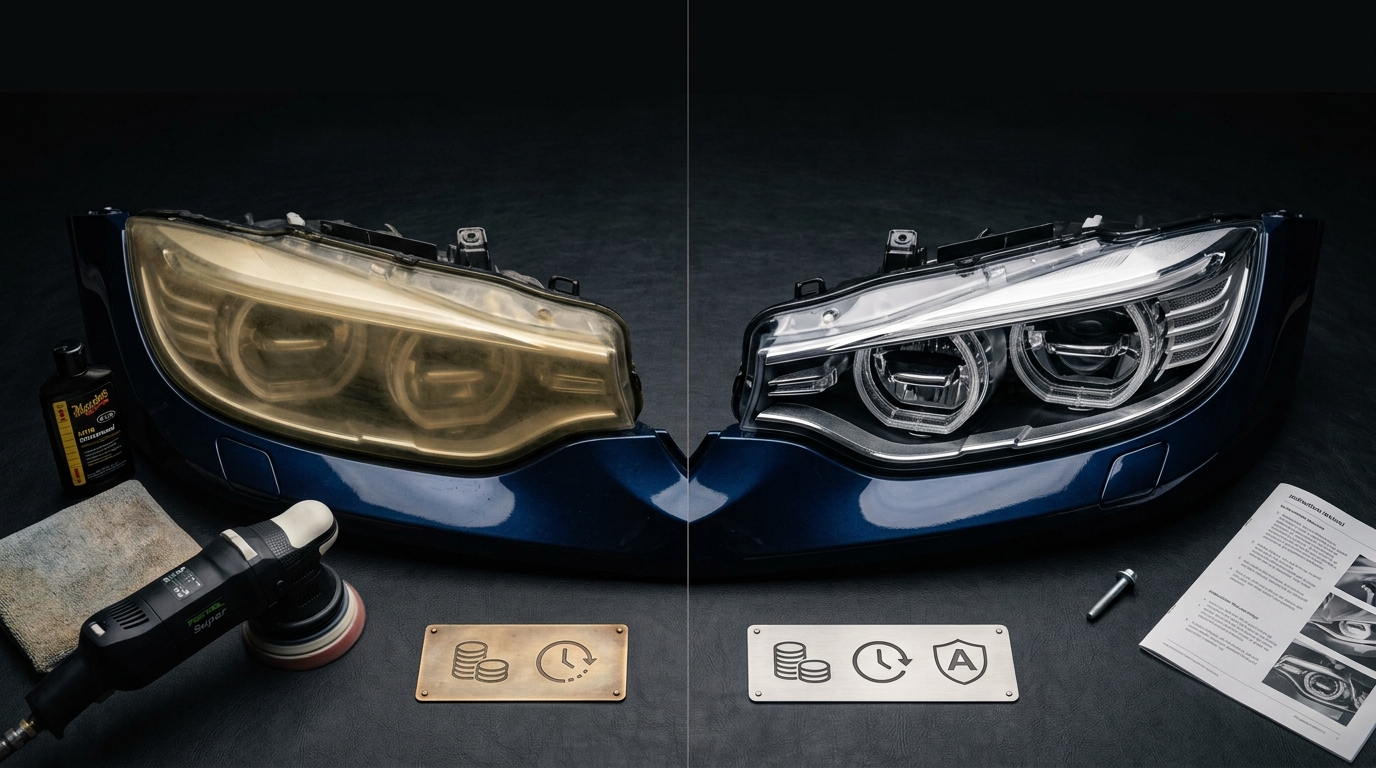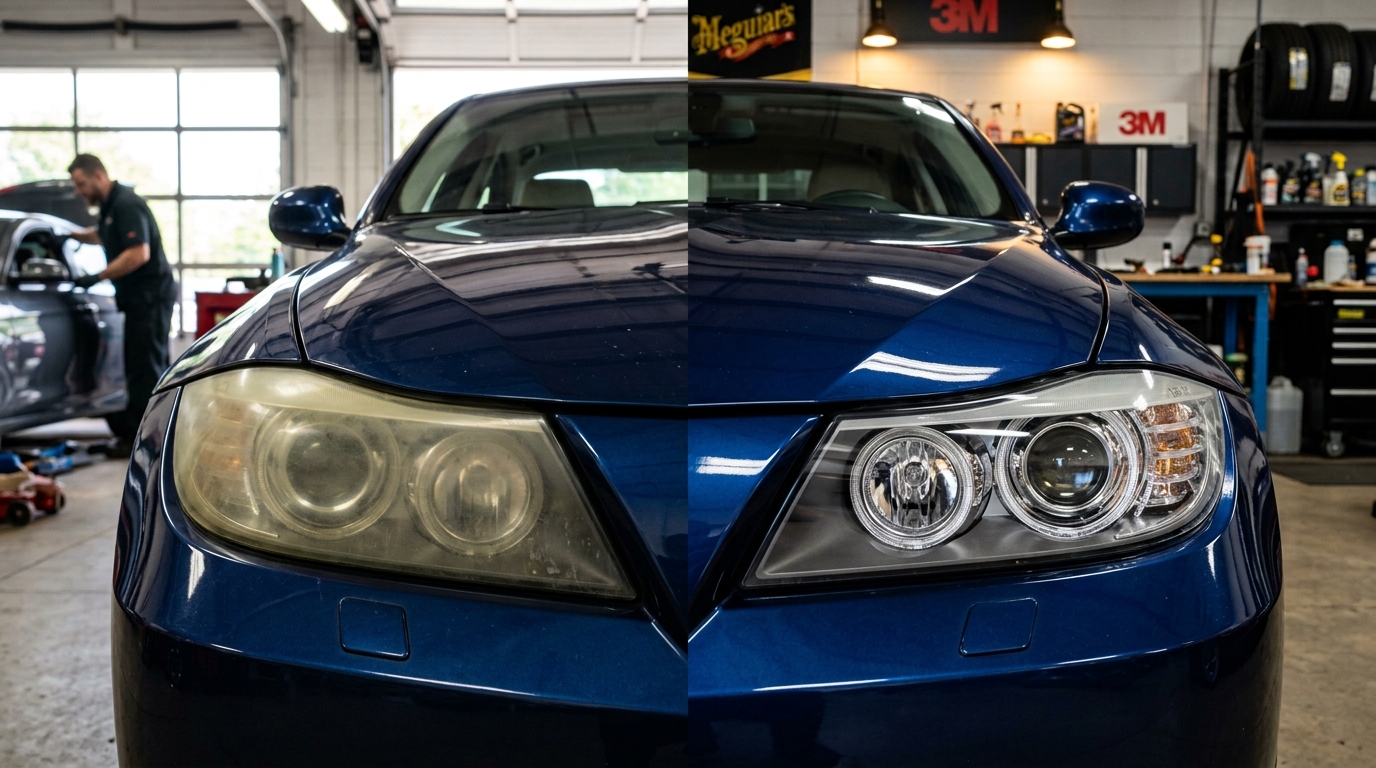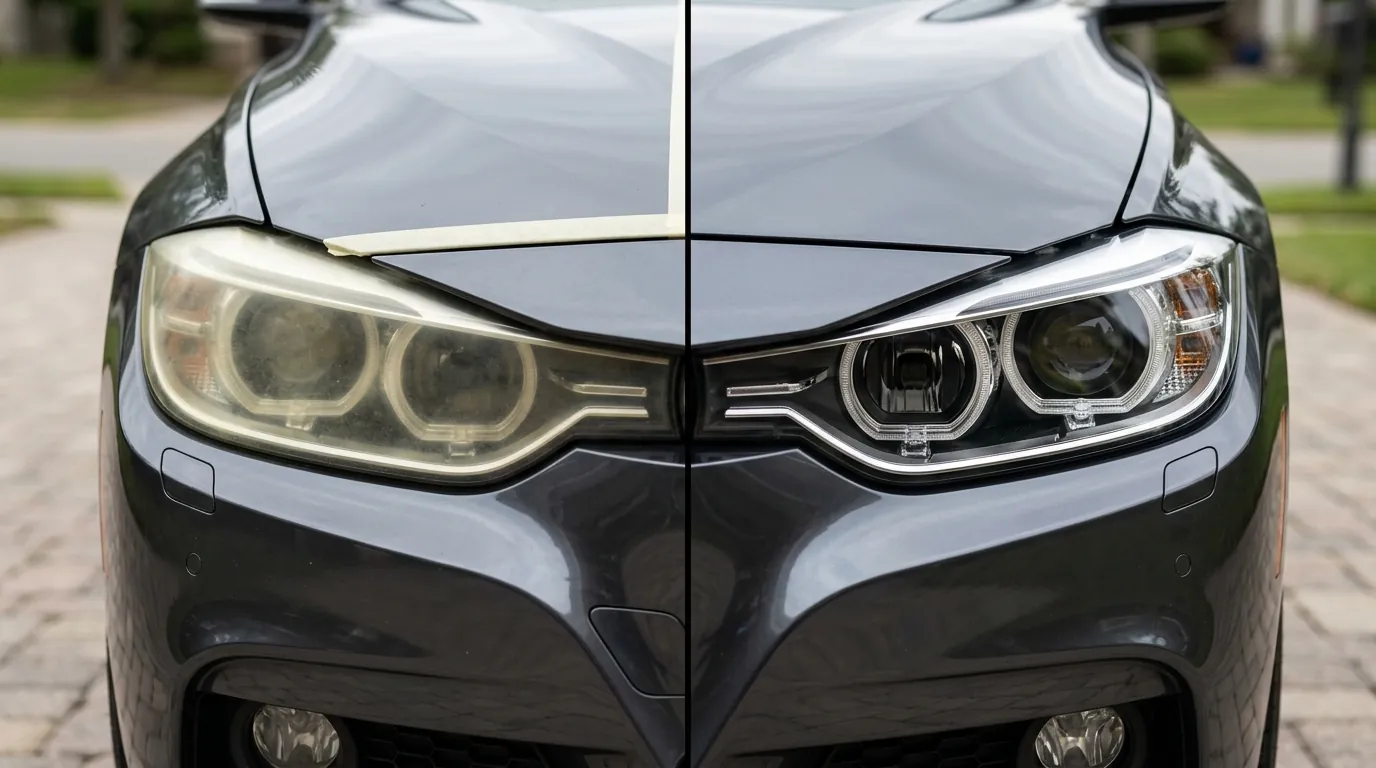

If you have ever looked at your car and asked yourself “why are my headlights foggy?“ you are not the one. Headlight lenses can become yellow, hazy or dull as time passes. Sometimes the issue is because of oxidation on the outside while moisture that gets inside the headlight assembly can cause a kind of fog. Knowing what is causing the problem can help you pick the fix and stop you from replacing a headlight that could still be fixed.
Why Are My Headlights Foggy?
Foggy headlights usually happen because the clear plastic lens has gotten worse or because moisture has gotten inside the assembly. Most modern headlights are made with polycarbonate plastic, which’s strong but can still be affected by sunlight, weather, road debris and getting older.
If the fog looks like a yellow layer on the outside, oxidation is probably the reason. If you see condensation or water drops inside the headlight there might be a problem with the seal or the housing instead.
The difference matters because outside cloudiness can often be fixed with restoration while inside moisture might need a check of the whole assembly. A simple look can tell you what is going on. Check the lens in daylight. See if the surface looks cloudy or if the moisture seems to be behind the lens.
What Causes Headlights to Become Cloudy?
Many things can slowly change how clear the plastic headlight lenses look. Most of these issues come from use of the car rather than a sudden breakdown.
Oxidation from Everyday Exposure
Headlight oxidation happens when the outside layer of the plastic starts to wear away. Once the lens is exposed to air and other things in the environment the surface can get a hazy or yellow look.
The surface can accelerate due to airborne particles, water, dust, and grime. Washing the car can take away the dirt. It cannot make the plastic better once it has already oxidized. That is why an old headlight can stay cloudy even if the car has been cleaned well.
Sunlight and UV Damage
UV light is one of the reasons plastic headlights turn yellow or cloudy. The sun slowly breaks down the coating that’s on the lens. As that coating gets worse the plastic is more likely to get oxidized and change color. Cars that are parked outside for a time might get more UV light than cars that are kept in a garage. Over years the sun can make the lens look faded, yellow or cloudy.
Moisture Trapped Inside the Headlight
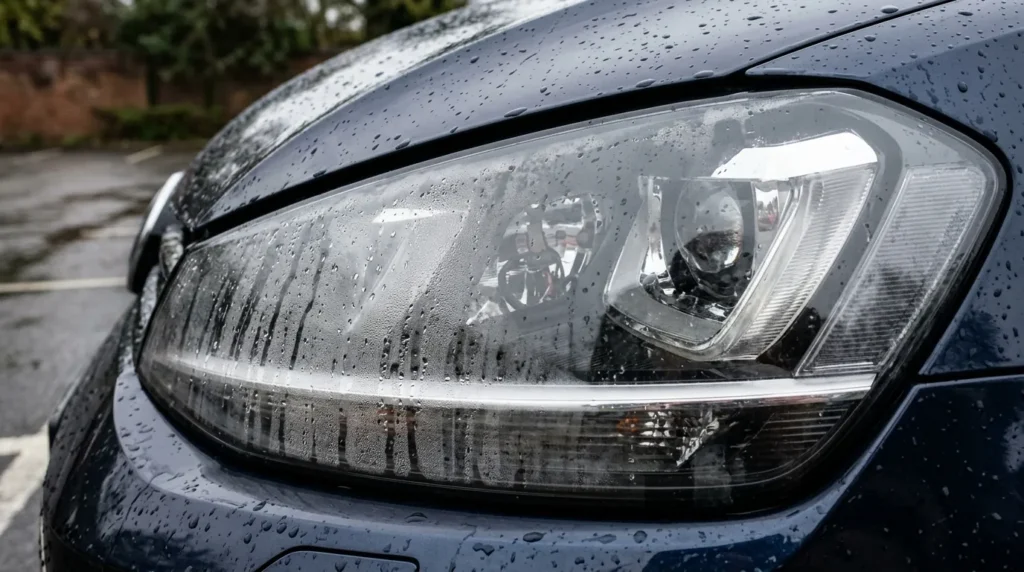
Not every foggy headlight is because of the outside. Water that gets inside the headlight can make the lens look foggy, from the inside. A little bit of condensation can happen because of temperature changes.. If there is a lot of moisture visible drops of water or water that stays that might mean the seal, vent or housing is broken.
Cleaning the outside of the lens will not fix moisture that is stuck inside. In this case you need to check what is causing the problem.
Simple Ways to Prevent Headlights from Becoming Cloudy Again
If you are searching for why are my headlights foggy? keep in mind that You cannot stop headlights from aging. Proper care can slow down the surface damage. A few easy habits can help protect the lens and keep it looking good.
Wash headlights often. Dirt, road grime, salt and other gunk should not be left on the lens. Use cleaning products. Harsh chemicals or rough materials can harm the surface or the protective layer.
Park in a garage or in the shade when you can. This reduces sunlight and limits UV exposure. Avoid scrubbing hard. Rough tools can create scratches that make the lens look dull.
Make sure the UV protection is maintained. If headlights have been restored professionally check that a proper coating was added. Inspect the lens now. Then. Early yellowing or haze is easier to fix than serious oxidation left for long.
If moisture keeps forming inside the headlight get it checked. Don’t treat it like surface cloudiness.
Why Clear Headlights Are Important for Safe Driving
Headlights help you see the road and let other drivers see your vehicle. A clear lens lets the lighting system work the way it should. Severe surface damage can change how the light looks and how well it shines.
Cloudy or yellow headlights can stand out more at night in rain or in fog. The impact depends on how bad the damage’s how the bulbs or internal parts are working. Clear headlights also make it easier to spot problems. If one headlight suddenly looks dimmer than the other the issue might not just be the lens.
For this reason fixing oxidized headlights is not just about looking better. It is also about keeping the lighting system in shape and ensuring the lenses stay as clear as possible.
FAQs
Why do plastic headlights turn yellow over time?
Plastic headlights turn yellow because of long-term exposure to sunlight. UV rays break down the coating on the lens. Once that coating wears off the plastic is exposed to oxygen, moisture and dirt. These elements cause the surface to degrade. Over time the lens becomes yellow, cloudy, chalky or dull. Regular cleaning and using a UV protectant can slow this process down.
Is driving with headlights dangerous?
Driving with headlights can be dangerous especially at night or in bad weather. Cloudy lenses block light, reducing visibility for the driver and making it harder for others to see the car. This can increase the risk of accidents. The level of danger depends on how bad the cloudiness is. If your headlights look hazy or dim it’s an idea to get them checked.
Can I restore headlights myself?
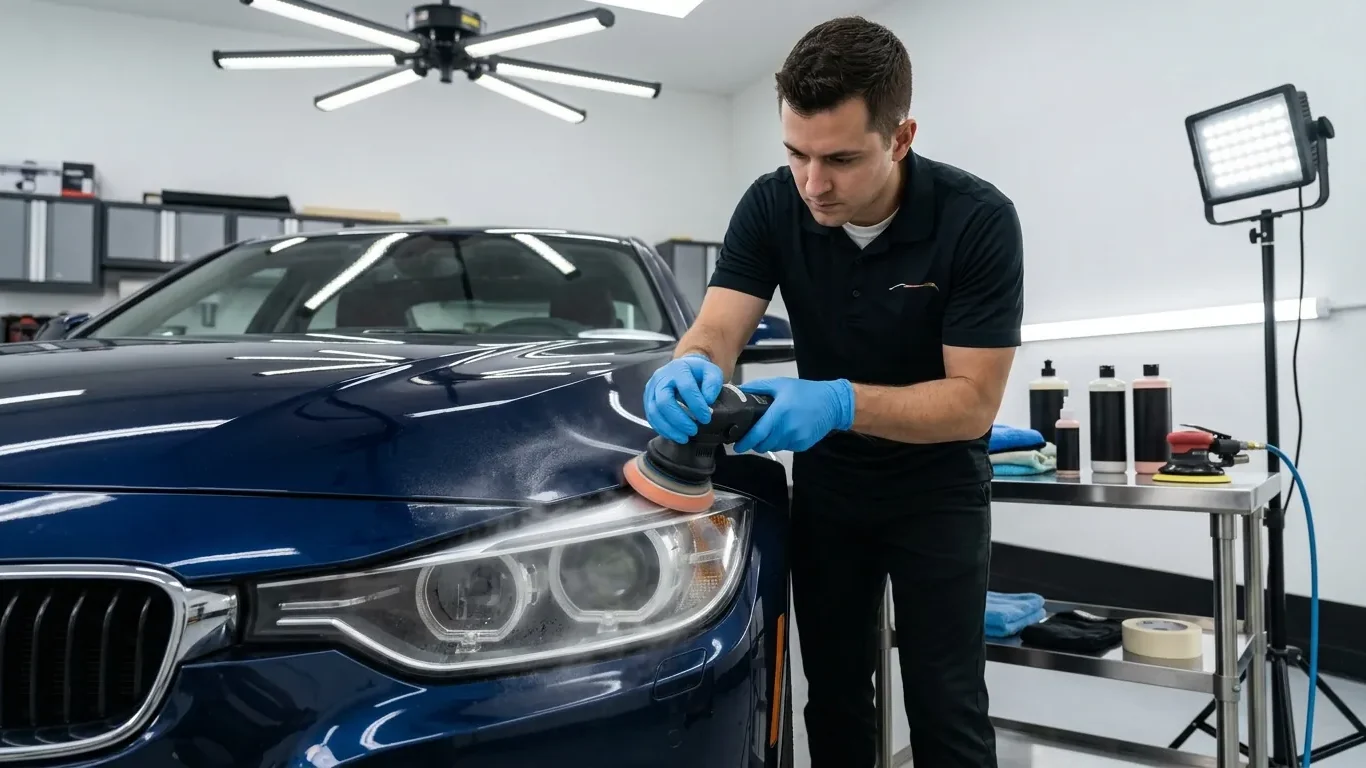
Yes you can try to restore headlights yourself using DIY kits. These kits often include sandpaper, polish and a protective coating. They can help with haze and make the lens look better for a short time.. For deep oxidation or uneven damage the results may not last. Proper sanding, polishing and UV protection are key. Without the tools and technique a quick polish might only clean the surface. It won’t fix the damage. For longer-lasting results professional restoration is often the better choice.
How can I keep my headlights clear after restoration?
To keep headlights clear after restoration, clean them regularly with -abrasive cleaners. Avoid using scrubbing tools or materials that scratch the surface. Try to park in the shade or use a car cover to reduce sunlight. It is important to make sure the restored lens is protected with a UV-resistant coating. Check your headlights often for signs of haze or yellowing. If you notice oxidation returning, treat it early. Addressing the problem quickly helps keep your headlights clear for a time.